
Swiss Energy Perspectives
Under the leadership of Prognos, TEP Energy will work with other renowned partners to develop the Swiss Energy Perspectives on behalf of the Swiss Federal Office of Energy.
The new Energy Perspectives 2060 is a key instrument for the Swiss government's long-term energy and climate policy. To develop them, the well-established Energy Perspectives 2050+ team consisting of Prognos, TEP Energy, and Infras has been reinforced with Meteotest, PSI, OST, and GWS. Together, we are a strong team of technical, climate, and economic experts who are developing scientifically sound and practical foundations for shaping Switzerland's energy future. The results of Energy Perspectives 2060 are used by the federal government, cantons, municipalities, regulators, grid operators, energy suppliers, and environmental organizations to update their goals and strategies.
TEP Energy simulates the energy demand of residential and non-residential buildings. It takes into account the energy efficiency of numerous electricity applications such as lighting, information and communication (ICT) including data centers, commercial refrigeration, large medical equipment, and ventilation, as well as the thermal demand for cooling and heating. The fossil fuels still in use today are to be gradually replaced by renewable energy sources and suitable technologies for heat pumps or thermal networks.
Using the building stock model (BSM) employed for this purpose, we also model gray emissions (“emissions from production” according to SIA terminology or “embodied emissions”) and material flows, thereby creating a link to demand in the industrial model. In terms of heat supply, we use the Spatial Energy Analysis Toolbox (REAT) to examine the supply-side potential of renewable energies from water, geothermal energy, and infrastructure facilities such as wastewater treatment plants and waste incineration plants. On the other hand, we use the REAT to determine the potential of thermal networks as a function of economic efficiency. In this context, we are working with the Institute for Solar Technology (SPF) at OST to investigate the role of thermal storage in load balancing and seasonal shifting.
Project Information
Project durationAugust 2026 to the end of 2027
Contact at TEP EnergyMartin Jakob
Contracting partySwiss Federal Office of Energy (SFOE)
Project partnersPrognos, Meteotest, PSI, INFRAS, OST, and GWS
Reference projects

Data centers in Switzerland - Electricity consumption and efficiency potential
Server rooms and data centres account for a substantial proportion of electricity consumption in Switzerland. We are currently conducting a survey to validate electricity consumption and energy efficiency potential.

Cantonal energy indicators and CO2 emissions in the building sector
In the context of the CO2 reporting, TEP Energy is developing a methodology for quantifying cantonal energy indicators and CO2 emissions from the building sector.

Sustainability Reporting for EPIC Suisse AG
Since 2022 TEP Energy and Sustainserve have supported EPIC in its sustainability reporting, particularly by calculating energy and water consumption and the corresponding greenhouse gas emissions by scope. These findings have contributed to EPICs greenhouse gas emission monitoring and its reduction pathway.
Analysis of indirect greenhouse gas emissions from building infrastructure in the city of Zurich
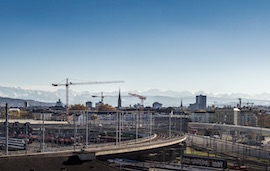
TEP Energy is recalculating the Scope 3 emissions of Zurich's building infrastructure for the city of Zurich in order to provide a better basis for planning.

Scope 3 emissions from the Basel-Stadt building stock
The canton of Basel-Stadt has asked TEP Energy to assist in developing the basis for grey emissions caused by the construction, renovation, conversion and demolition of its building stock.
SURE - SUstainable and REsilient energy for Switzerland
Sweet - SURE analyses the impact of disruptive events on the Swiss energy system. TEP Energy is working on energy demand topics such as the development of demand for energy sources in Switzerland, the impact of shocks on the demand load and the potential use of large heat pumps.

Scope 3 emissions of a portfolio of existing commercial buildings and new construction projects
Together with its partner Sustainserv, TEP Energy is supporting one of Switzerland's leading property managers and developers with environmental reporting (ESG). To this end, methodological issues are being clarified and initial results published in the environmental report. This includes the calculation of the greenhouse gas emissions of Scope 3 of the 'Construction' phase (construction + disposal) of maintenance and renovation activities for the entire building portfolio which includes existing buildings but also newly built projects.
Ex-Post Analysis of Energy Demand in the Swiss Service Sector
Together with Prognos and Infras, we periodically carry out ex-post analyses of the energy demand in Switzerland on behalf of the Swiss Federal Office of Energy (SFOE). TEP Energy is responsible for the sectors services and agriculture.

Potential and feasibility study for heat supply in Aesch
The municipality of Aesch (BL) is developing a climate-friendly, economical and secure heat supply for households and businesses. The aim of the municipality is to achieve the national climate targets (net zero by 2050) and build a sustainable energy infrastructure. As part of the feasibility study, renewable energy sources for heating and hot water, including geothermal energy, local and district heating solutions and air-to-water heat pumps, were analysed. TEP Energy analysed their economic viability and possible implementation in various sub-areas. The study was carried out in collaboration with eicher+pauli, the municipality of Aesch and the Basel-Landschaft Office for Environmental Protection and Energy and forms the basis for the municipality's heat planning.
Preparation of energy data for Pensimo Management AG
TEP Energy has been recording the energy data of Pensimo Management AG's approximately 600 properties every year since 2023.
Heat supply concept 2040 for the city of Zurich
TEP Energy is supporting the city of Zurich in further developing the heat supply concept, which serves as the basis for the city's municipal energy planning.

Energy City Glarus
The Energy City label certifies municipalities that are continuously committed to the efficient use of energy, climate protection, renewable energies and environmentally friendly mobility. Since 2020, TEP Energy has been supporting the municipality of Glarus in the implementation and re-audit of the Energy City label in 2024.

Criteria for Climate-Compatible Building Financing in Switzerland
TEP Energy and Raffeisen Schweiz show clear criteria on how to invest in climate-friendly buildings.

Net-zero greenhouse gas emissions in the building sector
Together with partners, TEP Energy is developing methodological principles (F0) based on the WLCNN method, examining the achievability of net-zero targets (F1) using technical and economic scenarios and developing implementation strategies (F2, F3) with technical and political concepts. In addition, existing standards are analysed in order to harmonize regulations and ensure comparability (F4).

Energy renovation rates in the building sector
Various federal and cantonal energy and climate policy measures are aimed at significantly increasing the energy renovation rate. Based on this comprehensive survey, the report shows how the energy renovation rate has developed in recent years and how high it currently is.
CO₂ emissions tool for the ETH Board: analysis, scenarios and net zero by 2040
The ETH Board's CO2 emissions tool was adapted and expanded.

Municipal heat planning in Volketswil
With reference to its climate policy objectives and as a result of its energy city process, the municipality of Volketswil is having its municipal energy planning revised.

Municipal energy planning in Glarus
Based on the cantonal energy law revision of 2021, the municipality of Glarus is revising its municipal energy planning with the aim of achieving a fossil-free heat supply. TEP Energy is supporting the municipality with its solutions, such as the Spatial Energy Analysis Toolbox (SEAT) and the building stock model, in order to achieve the energy and climate targets in a sustainable and economically efficient manner.

Solar energy strategy and potential study in Wädenswil | TEP Energy
TEP Energy is conducting a solar strategy and potential study to accelerate the expansion of solar energy in the city of Wädenswil.
Motivations for Investment in Smart Technologies and Energy Efficiency: The Case of Residential Buildings
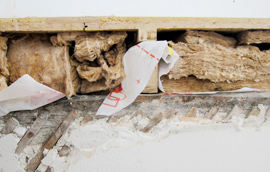
Through the MISTEE project, we analyse how households' investments in buildings' energy efficiency and smart technologies are motivated and what impact different policies can have.
MEDIUS
MEDIUS bridges the gap between green finance and green projects to decarbonize buildings at scale.
Calculation Tool for 2000-Watt Sites II
Revised calculation tool for the evaluation of settlement areas regarding indicators of the 2000-watt society.
Country-specific Market Reports for Buildings
Building Market Briefs (BMB) is a Climate KIC initiative within the flagship Building Technologies Accelerator (BTA) that aims to gather and promote knowledge about the buildings' and construction sector to promote low carbon investment and scaling.

Swiss Energy Perspectives 2050+
To update the SFOE's energy perspectives, we are preparing the scenario results for the services and agricultural sector.
IEA ECB Annex 70: Analysis of Building Energy Data with a Scalable Building Stock Model
Relationship between building park modelling and real building and energy data.
PUEDA+: Promotion of energy efficiency in data centers and server rooms
Program to promote energy efficiency in the Swiss IT industry

Evaluation of measures using impact and cost analysis within the "Solar Strategy” project
Review of the expansion path of solar energy in the cantons of Aargau and Zurich

From the Certificate to Physics
Ways to net zero compatible buildings in the city of Zurich

New Trends in Energy Demand Modelling
In this Horizon2020 project, the impact of new societal trends on the energy consumption are modelled and analysed.

LICS – Low-investment-cost retrofit solutions
Potentials and limitations of existing and new low-investment-cost retrofit solutions to achieve a benchmark of 6 kg CO2 per m2 in existing buildings
Energy certificate data to characterise the building stock
Gaining knowledge about the energetic quality of the German building stock from energy performance certificates

Reference Values of Cooling Systems in Buildings
Compilation of cooling reference values and improvement of the data basis to have a better support for strategic building planning
Energy Law Report for the Canton of Basel-Landschaft
Development of a methodology for the periodic evaluation of the measures and goals of the canton's energy law.

sEEnergies - Cost potential curves for refurbishment strategies in Europe
Quantification of synergies between Energy Efficiency First Principle and renewable energy systems for 2050 decarbonization
Funding Programme SOKAS: System Optimisation of Industrial Refrigerating Plants
The subsidy programme SOKAS supports the sustainable system-wide energy optimisation of large cooling and refrigeration plants. In addition to lower energy costs, system operators benefit from an attractive subsidy of up to 40% of the total project costs.
REFLEX Project: Flexibility and Technological Development in the European Energy System
REFLEX focuses on techno-economic learning, fundamental energy system modelling and social and environmental life cycle analysis.
Heating Initiative Switzerland
On behalf of the Swiss Heating Initiative (WIS), the decarbonization of the heating sector will be examined by 2050. Spatial potential analyzes and the Swiss building stock model (GPM) are used.

Heat Roadmap Europe (HRE) – Study on the European Heating and Cooling Market
In Europe, the energy system is to be decarbonised in the long term, i.e. no more CO2 emissions will be emitted. We estimate energy efficiencies cost potential curves for 14 European countries.
The Role of Gas Infrastructure in the Future Energy System
Energy policy decisions and technological developments lead to an increase in fluctuating renewable energy production. More flexibility in the power grid and storage possibilities is required to which the buildings' sector may contribute.
EEG Platform: Efficiency and Renewable Energy in Buildings (EEG)
Through the EEG platform, the developed actions from the EEG Action Plan can be jointly further developed and implemented throughout Switzerland.

CoolCity
Assessment of the potential for lake water use for heating and cooling in the city of Zurich
EEG Workshop: Energy Efficiency and Renewable Energies in Buildings (EEG)
The EEG Workshop on Energy Efficiency and Renewable Energy in Buildings (EEG) is part of the global programme "Energy Efficiency and Building Technology Accelerator" (EEB) of the World Business Council for Sustainable Development (WBCSD) and Climate-KIC.

CREAM – Integrating Climate Change Mitigation, Resource Efficiency and Adaptation in Building Stock Modelling
Objectives, strategies and measures in the field of climate protection, energy planning and the further development of energy networks in cities are designed using the Building Park Model (GPM) in a cross-sectoral manner.
Definition and monitoring of security of supply on the European electricity markets from 2017 to 2019
Within the framework of the project, existing concepts of supply security on the European electricity market are to be analysed and monitoring concepts based on them are to be further developed.
Study on the Subsidiary Ban of Fossil-Fuelled Heating Systems
Swiss climate policy is facing major challenges, especially in the buildings sector. The study investigated the effects of a possible ban on fossil-fuelled heating systems from 2030, if the climate targets cannot otherwise be achieved.
Energy-Saving Contracting
Increasing energy efficiency is one of the central pillars of Swiss energy policy and energy-saving contracting contributes to this goal.
INSPIRE Tool: Energetic, Ecological and Economic Renovation of Buildings
With the INSPIRE tool you can calculate energy, ecological and economic indicators as well as strategies for the reduction of greenhouse gas emissions (GHG) and primary energy consumption of buildings.

Mapping and Analyses of the Current and Future (2020-2030) Heating/Cooling Fuel Deployment (Fossil Fuels/Renewables) in Europe
The energy balances of statistical offices in many countries and Eurostat are often incomplete. This EU service contract maps current and future energy demand for heating and cooling.
Instruments for Implementing Efficiency Measures in Building Technology
Which instruments support the implementation of efficiency measures in building services engineering as effectively and efficiently as possible?
Extension of the Building Stock Model for the SIA Efficiency Path
Using the enhanced building stock model, the primary energy and greenhouse gas emissions of new buildings and renovation projects are compared with the target values to review the impact of energy policy objectives.
Analysis of the State of Insulation Materials in the Swiss Building Stock
With regard to energy and resource policy, we must ask ourselves how we will deal with insulating materials in the future.
Energy Supply Concept 2050 for the City of Zurich
The Energy Supply Concept 2050 used a scenario approach to show that the heat supply of the city of Zurich could meet the goals of the 2000-watt society.
Potential Assessment of Measures in the Field of Building Technology
Where are what potentials to increase energy efficiency and to reduce greenhouse gas emissions (GHG) in building services engineering?
Analysis of Market Opportunities and Potentials in the Heating and Cooling Sector
Evaluation of new market opportunities on behalf of a large Swiss electricity supplier.
Integration of embodied Energy into the Building Stock Model (BSM)
By 2050, the City of Zurich intends to fully meet the goals of the 2000-watt society. Energy consumption in existing buildings and embodied energy are also part of this scope.
Contributions to the ewz Energy Research Programme on the 2000-watt Society
«Energy Research City of Zurich» is a 10-year programme for applied energy research.
Economic Analysis of Measures for the Energy Strategy 2050 – Efficiency Regulations for Electrical Appliances
With the Energy Strategy 2050, the Federal Council is pursuing the goal of significantly reducing electricity consumption in Switzerland by 2050 compared with a reference development.
Electricity Efficiency of the Swiss Economy – Evaluation and Scenarios of the EnAW
The impact of EnAW's previous activities in the field of electricity efficiency is statistically evaluated and the future development is bottom-up estimated.
Pilot Study: Building Stock Model (BSM) for Office, School and Residential Buildings
In collaboration with the ETH Chair for Sustainable Building, we developed a pilot version of the building stock model for Switzerland and for the city of Zurich.